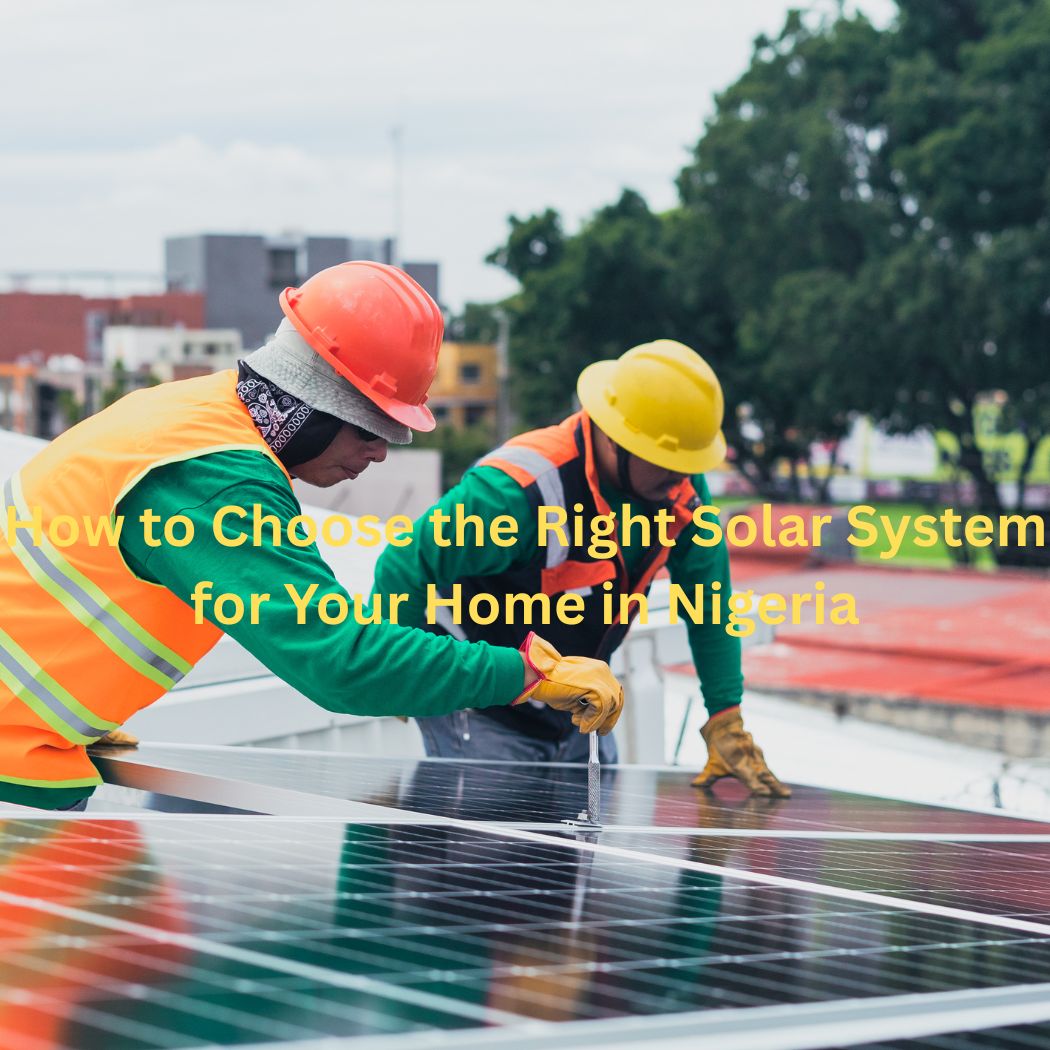
Choosing a solar system for your home is not just about buying an inverter, charge controllers, batteries and some solar panels. The right system depends on the appliances you have or want to run with it, how many hours you want to use them daily, how long you want your batteries to last, and your budget.
A small solar system may be enough for lights, fans, a TV and a decoder, while a larger system may be needed if you want to run a refrigerator, freezer, pumping machine, washing machine or air conditioner.
This guide will show you how to choose the right solar system for your home in Nigeria, even if you don’t know much about solar energy.
What Makes Up a Solar System?
A typical home solar system can contain:
- Solar panels – produce electricity from sunlight.
- Inverter – changes the electricity from the batteries/solar panels into the type of electricity your home appliances use.
- Battery – stores electricity for use when there is no sunlight or when NEPA/PHCN power take their light.
- Charge controller – controls how electricity from the solar panels charges the batteries. Some inverters already have a built-in charge controller.
- Protection and accessories – cables, breakers, fuses, isolators, surge protection and other installation materials.
Not every system needs every component as a separate device. For example, many modern hybrid inverters already have an MPPT solar charge controller built into them.
Step 1: List the Appliances You Want to Power
This is the first and most important step.
Before buying anything, write down the appliances you want your solar system to run.
For example:
| Appliance | Approx. Power | Quantity |
|---|---|---|
| LED bulbs | 10W | 6 |
| TV | 100W | 1 |
| Decoder | 20W | 1 |
| Standing fan | 60W | 2 |
| Refrigerator | 150W | 1 |
| Laptop | 65W | 1 |
| Wi-Fi router | 15W | 1 |
These numbers are only examples. The actual power of your appliances can be different, so check the label on the appliance in your home to confirm or understand it well.
Remember you don’t need to put everything in your house on solar.
For example, you may decide to leave:
- electric cooker
- electric iron
- water heater
- large pumping machine
- air conditioner
Then when you off the small appliances, you can then on them. You also can decide to start with a small solar setup and add up or upgrade later for you to use them.
This idea can reduce the size and cost of your solar system in a great way.
Step 2: Calculate Your Total Load
Now add the power or watts of the appliances you want to run at the same time.
For example:
- 6 bulbs × 10W = 60W
- TV = 100W
- Decoder = 20W
- 2 fans × 60W = 120W
- Refrigerator = 150W
- Laptop = 65W
- Router = 15W
Total:
60 + 100 + 20 + 120 + 150 + 65 + 15 = 530W
So the appliances will use about 530 watts when they are running together.
But this does not mean you should buy a 530W inverter pr solar setup of the exact size.
There are many things you need to consider the inverter’s capacity and the starting power of appliances such as refrigerators, freezers, pumps and some air conditioners.
Step 3: Choose the Right Inverter Size
The inverter is mainly chosen based on the maximum load you expect to run at the same time.
For example:
| Inverter | Approximate use |
|---|---|
| 1kVA | Small basic loads |
| 1.5kVA | Lights, TV, fans and small appliances |
| 2kVA | Larger basic home loads |
| 3kVA | Small home with more appliances |
| 5kVA | Larger home and more demanding appliances |
| 6kVA–8kVA | Large homes and heavier loads |
| 10kVA+ | Large homes, offices and businesses |
These are only general examples. Your actual system or setup that you will use should be sized from your appliance load.
Also remember that kVA and kW are not always exactly the same.
For example, a 5kVA inverter may not be designed to continuously supply 5kW of usable load in every situation.
Don’t choose an inverter based only on the number of rooms.
A three-bedroom house can have a smaller solar system than a two-bedroom house if the appliances are different.
A house with:
- refrigerator
- freezer
- two ACs
- pumping machine
- washing machine
- electric cooker
will need much more power than a larger house that mainly uses:
- lights
- fans
- TV
- refrigerator
- laptops
Step 4: Decide How Long You Want the Battery to Last
This is where many people make mistakes.
Your inverter tells you how much power you can use at once.
Your battery determines how long you can keep using that power.
For example, a 5kVA inverter does not mean that you will get 5 hours of electricity.
You could have:
5kVA inverter + small battery
and run out of stored energy quickly.
Or:
5kVA inverter + larger battery bank
and have much longer backup.
Think of it this way:
Inverter = size of the pipe
Battery = size of the tank
A bigger pipe allows more appliances to run.
A bigger tank allows you to run them for longer.
Step 5: Understand Battery Capacity
Battery capacity is often shown in Ah (amp-hours) or kWh (kilowatt-hours).
For example:
A 12V 200Ah battery has a nominal energy capacity of:
12 × 200 = 2,400Wh
or:
2.4kWh
However, you should not assume that the full 2.4kWh will always be there for you to use it all instead it can give you some percentage of it.
This is especially important with lead-acid batteries.
Lithium batteries can generally be used more deeply than traditional lead-acid batteries, all these also depend on the manufacturer’s specifications.
That’s why comparing batteries only by Ah can be misleading.
A better comparison is:
Voltage × Ah = nominal battery energy
Lithium or Tubular Battery?
This is one of the biggest decisions you will make.
Lithium battery
Lithium batteries are usually:
- more expensive initially
- lighter
- longer-lasting
- faster to charge
- capable of deeper discharge
- easier to maintain
- better suited to frequent daily cycling
Many modern solar systems in Nigeria now use LiFePO4 lithium batteries.
Tubular/lead-acid battery
Tubular batteries are usually:
- cheaper to buy initially
- heavier
- larger
- easier to find
- good for solar backup
- more maintenance-intensive if they are flooded batteries
- generally not suitable for the same deep daily discharge as lithium if long life is the goal
So don’t just ask:
“Which battery is cheaper?”
Instead ask:
“Which battery gives me the best value over the years?”
Step 6: Choose Your Solar Panels
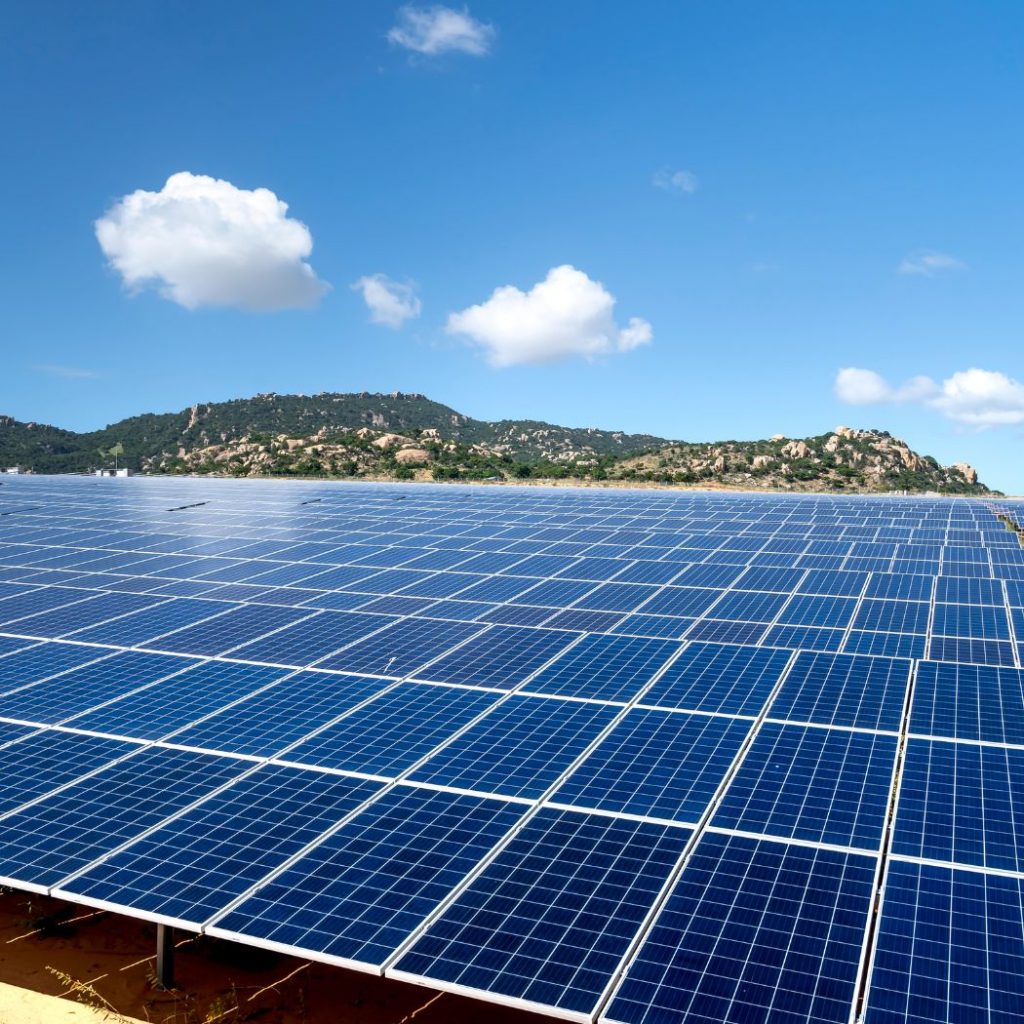
Your solar panels must be large enough to produce the energy your home uses and recharge your batteries.
For example, you might have:
- 500W panels
- 450W panels
- 400W panels
- 250W panels
- 200W panels
- 150W panels
- 100W panels
It is not a must to have high wattage panels like500W panels, all depends on your setup.
Smaller panels can still be useful for small systems, especially where space, budget or system size makes them practical.
For a larger system, however, using higher-wattage panels can reduce the number of panels needed.
For example:
5 × 500W panels = 2,500W
while:
10 × 250W panels = 2,500W
Both arrays have the same total panel wattage, although the physical size, electrical characteristics and installation requirements can differ.
Step 7: Consider Nigeria’s Sunlight
Solar panels don’t produce their maximum rated power all day.
A panel rated:
500W
doesn’t mean it produces 500W continuously from morning until evening.
Solar production changes because of:
- time of day
- clouds
- rain
- heat
- dust
- shading
- panel direction
- panel angle
- system losses
This is why solar system design normally uses peak sun hours rather than simply counting all daylight hours.
For planning purposes, many Nigerian solar calculations use roughly 4–5 peak sun hours, but the actual result depends on the location and season.
Step 8: Don’t Forget the Charge Controller
If your system uses a separate solar charge controller, you need to choose between:
PWM
PWM controllers are generally:
- cheaper
- simple
- suitable for small systems
- common in basic solar installations
MPPT
MPPT controllers are generally:
- more efficient
- better for larger systems
- able to make better use of available solar power
- more expensive
Many modern hybrid inverters already include an MPPT controller, so you may not need to purchase another one separately.
Step 9: Think About Your Budget
This is where you should avoid making one common mistake:
Don’t spend your entire budget on the inverter.
A solar system is made up of several parts.
Your budget may need to cover:
Inverter + batteries + solar panels + protection + cables + installation + mounting materials + other accessories
For example, someone may see a 5kVA inverter advertised for ₦800,000 and think:
“I can build my solar system with ₦800,000.”
But the inverter is only one part of the system.
The batteries alone can cost more than the inverter, especially if you choose lithium.
What Size Solar System Does an Average Home Need?
There is no single answer because homes use electricity differently.
But as a rough starting point:
Small basic system
Could power:
- lights
- TV
- decoder
- fans
- Wi-Fi
- laptops
- small refrigerator
Often falls around the 1.5kVA–3kVA range, depending on the actual load.
Medium home system
Could include:
- lights
- fans
- TV
- refrigerator
- freezer
- laptops
- small pumping machine
- other moderate appliances
Often falls around 3kVA–5kVA.
Large home system
May include:
- multiple refrigerators/freezers
- several fans
- pumping machine
- washing machine
- multiple TVs
- AC units
- other heavy appliances
This may require 5kVA–10kVA or more, depending on what is expected to run together.
These are starting points, not final system sizes.
The Best Way to Size Your Solar System
Instead of guessing from your house size, calculate your actual appliances.
SolarPriceNG has tools that can help you do this.
Use our Solar Calculator
You can enter your appliances and their usage to estimate the size of solar system you may need.
Calculate Your Inverter Size
If you mainly want to know what inverter capacity is suitable for your appliances:
Calculate Your Battery Size
If your main concern is:
“How many batteries do I need and how long will they last?”
use:
Calculate Your Solar Panels
You can also calculate the approximate number of panels needed for your system:
How Much Does a Solar System Cost in Nigeria?
The answer depends heavily on the system size and the type of equipment you choose.
For example, a system using:
tubular batteries + a basic inverter
will have a different price from:
lithium batteries + a premium hybrid inverter.
Prices also change with:
- brand
- battery capacity
- inverter capacity
- panel wattage
- installation
- cables
- protection equipment
- location
- exchange rates
- market conditions
You can check our regularly updated Solar Prices in Nigeria for current prices, ranges from solar panels, inverters, batteries and charge controllers.
Don’t Buy a Solar System Based on Someone Else’s Setup
You may hear someone say:
“I have a 5kVA inverter and four batteries and it works perfectly.”
That doesn’t mean the same setup will work for your home.
Their electricity usage may be completely different from yours.
For example, if they mainly use:
- fans
- lights
- TV
while you use:
- two ACs
- freezer
- refrigerator
- pumping machine
- washing machine
you will need a much larger system.
Your solar system should be designed around your own electricity usage.
A Simple Solar System Buying Checklist
Before paying for a solar installation, ask the installer:
1. What is my total estimated load?
Don’t accept only:
“You need 5kVA.”
Ask them to show you how they arrived at that number.
2. What battery capacity am I getting?
Ask for both:
Voltage + Ah/kWh
not just “two batteries.”
3. What type of battery is it?
Is it:
- Lithium?
- Tubular?
- GEL?
- AGM?
4. How many solar panels are included?
Ask for:
panel wattage × number of panels
5. What is the inverter model?
Don’t accept only:
“It’s a 5kVA inverter.”
Ask for the exact brand and model.
6. What happens if I add more appliances later?
A good system should be planned with future expansion in mind where practical.
Final Advice
The best solar system is not necessarily the biggest system you can afford.
It is the system that matches:
your appliances + your daily energy use + your backup needs + your budget.
If you only need lights, fans, TV and a refrigerator, you don’t need to spend millions of naira on a huge system.
But if you want to run several air conditioners, pumping machines and other heavy appliances, trying to save money by buying a very small system can lead to frustration.
Start with your actual load. Then choose the inverter, battery and solar panels around that load.
And if you are not sure where to start, use the SolarPriceNG calculators to get an estimate before asking an installer for a final quotation.