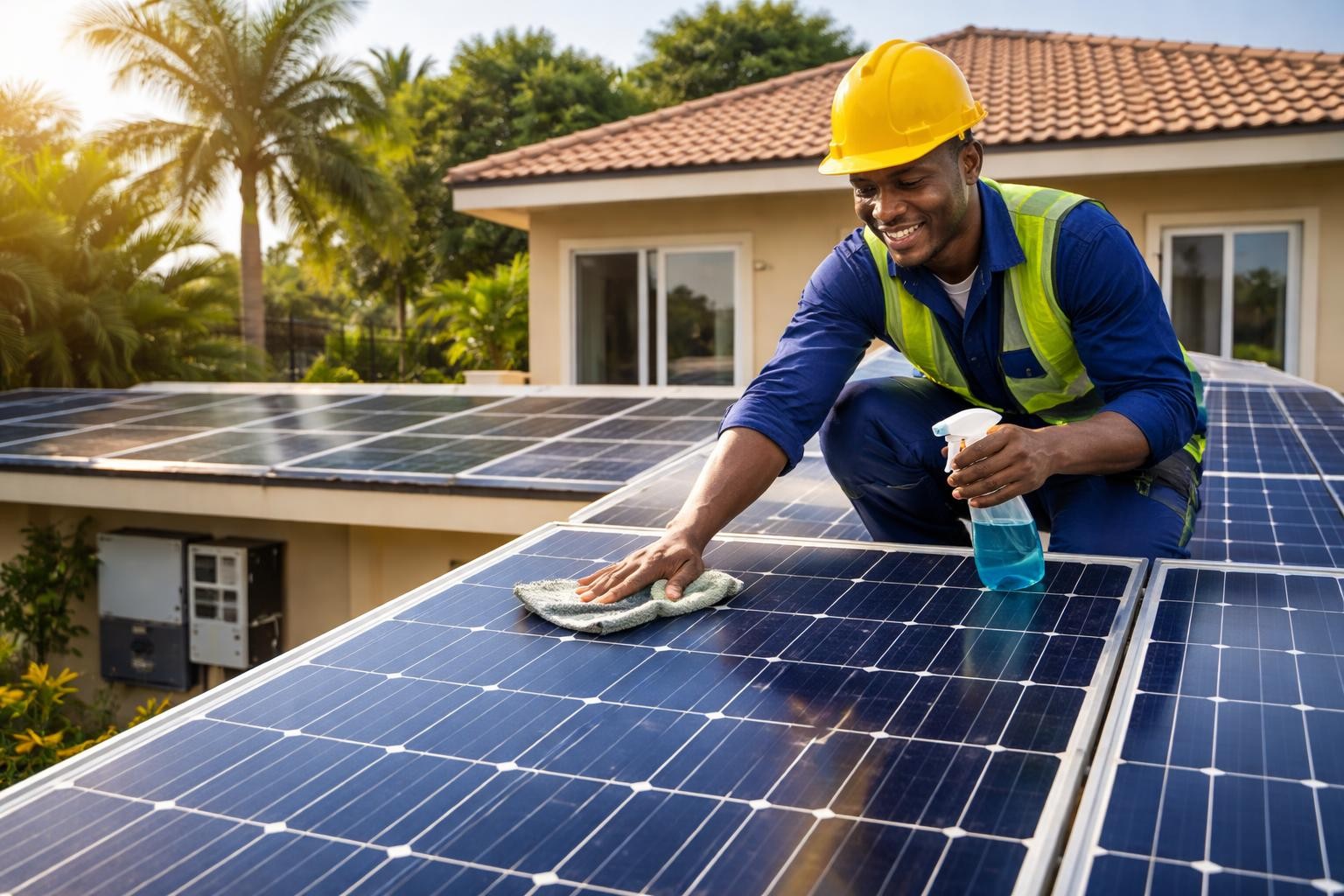
Solar panels do not need daily attention, but they do need simple, regular care. In Nigeria, dust from Harmattan, bird droppings, leaves, coastal salt air, heavy rain and loose connections can gradually reduce performance or create safety problems.
The most practical approach is to inspect your system regularly, clean the panels only when they are dirty, watch the system’s performance and call a qualified technician when the problem involves wiring, damaged panels or rooftop access.
This guide explains how to maintain solar panels in Nigeria safely, how often to clean them and the warning signs that should not be ignored.
Why solar panel maintenance matters in Nigeria
A solar panel can continue producing electricity while looking reasonably clean, but dirt and shading can reduce the amount of sunlight reaching the cells. Dust may be especially noticeable during Harmattan. Bird droppings, leaves and mud can also create small shaded areas that affect part of a panel or one panel in a string.
Maintenance is not only about getting more power. Regular checks can help you find:
- Cracked or broken panel glass
- Loose mounting hardware
- Damaged or exposed cables
- Water entering junction boxes or electrical enclosures
- New shading from trees, buildings or growing vegetation
- Unusual inverter alarms or repeated shutdowns
- Corrosion around frames, fasteners and connectors, especially near the coast
Preventive maintenance is usually cheaper and safer than waiting until the system stops charging your battery or powering your appliances.
How often should you clean solar panels in Nigeria?
There is no single cleaning schedule that works for every Nigerian home. The right interval depends on your location, roof or mounting position, nearby roads or construction, tree cover, bird activity, rainfall and how easily you can access the panels.
A useful starting routine is:
| Check | Suggested starting point | What to look for |
|---|---|---|
| Visual inspection | About once a month | Dust, droppings, leaves, shading, cracks and loose-looking parts |
| Panel cleaning | When dirt is clearly visible or output falls without another explanation | Harmattan dust, dried mud, bird droppings and oily deposits |
| Performance check | Monthly and after unusual weather | Lower solar input, charging problems, alarms or a sudden change from normal performance |
| Professional electrical inspection | Periodically and whenever a fault appears | Cables, connectors, protection devices, earthing, mounting and system settings |
Homes in dusty areas may need cleaning more frequently during Harmattan. A panel under trees may need more attention because of leaves and bird droppings. In a cleaner area with a good panel angle, rainfall may remove some dust, but rain should not be treated as a complete maintenance plan.
How to clean solar panels safely
Before cleaning, read the panel manufacturer’s instructions. Different modules can have specific requirements, and using the wrong chemical or method may damage the glass, frame, seals or warranty.
1. Choose a safe time
Clean early in the morning or later in the afternoon when the panels are cooler. Avoid climbing onto a hot roof in the middle of the day. Do not clean during rain, strong wind, lightning or when the roof is slippery.
2. Check the panels before wet cleaning
Look for cracked glass, damaged frames, exposed conductors, loose connectors and standing water. A cracked or broken panel can present an electrical shock risk, especially when wet. Do not wash a damaged panel yourself; keep people away from the area and contact a qualified solar technician.
3. Remove loose dust gently
If the dirt is dry, do not scrape or rub it aggressively. Use a soft, non-abrasive brush or a gentle stream of clean water to loosen the dust first. Dry rubbing can scratch the glass and leave fine marks that are difficult to see.
4. Wash with clean, low-mineral water
For normal dirt, clean water and a soft cloth, sponge or soft-bristle brush are usually sufficient. If your local water leaves white mineral marks, use water with lower mineral content if available, or dry the panels with a clean squeegee or soft cloth before mineral spots form.
Do not use sand, rough brushes, abrasive powder, strong solvents, petrol, diesel, bleach or harsh household chemicals. Do not apply oil, grease or pesticide to the panel surface. If there is an unusual oily deposit, follow the manufacturer’s cleaning instructions or ask a professional what product is safe for your module.
5. Rinse and check the result
Rinse away the loosened dirt and check that no cloth fibres, leaves or cleaning residue remain. Do not direct high-pressure water at junction boxes, connectors, cable entries or inverter equipment.
6. Never step on the panels
Solar panels are not designed to be used as walkways. Stepping on them can create micro-cracks or damage the cells even when the glass does not break immediately. If the roof is difficult or dangerous to access, hire a properly equipped technician instead of taking a risk.
What not to do when cleaning solar panels
- Do not climb a wet, steep or unstable roof.
- Do not assume switching off the inverter makes the panels electrically dead. Panels can still produce DC voltage in daylight.
- Do not disconnect solar connectors while the system is carrying current.
- Do not use abrasive brushes, metal tools or dry scraping.
- Do not use a pressure washer unless the module manufacturer specifically permits the method and the equipment is being handled safely.
- Do not spray water into the inverter, battery cabinet, combiner box or other electrical equipment.
- Do not wash cracked panels or touch exposed wires.
- Do not ask an untrained cleaner to work near live solar wiring.
For a rooftop system, the safest option is often to let a qualified installer handle cleaning and inspection together.
Check more than the panel surface
Clean glass is useful, but it is only one part of solar system maintenance. During a visual check from a safe position, also look at the following:
Shading and obstructions
Check whether a tree, new building, water tank, satellite dish or other object now shades the panels during part of the day. Trim vegetation only if it can be done safely and without touching the array or its cables.
Cables and connectors
Look for hanging, chewed, sun-damaged or exposed cables. Rodents and birds can damage cable insulation. Do not open connectors or repair solar wiring unless you are trained and authorised to do so. A technician should check cable routing, connector condition and protection devices.
Mounting structure
Look for movement, rust, bent rails, missing bolts or signs that wind has shifted the array. Do not tighten rooftop hardware while standing on the panels. A technician can check the mounting system properly, particularly after a severe storm.
Inverter and battery behaviour
Record unusual alarms, repeated shutdowns, fan problems or a sudden drop in solar input. If your system has a monitoring app or display, compare readings at similar times and under similar weather conditions rather than judging performance from one cloudy afternoon.
If the panels are clean but the system still produces much less power than usual, the cause may be shading, a faulty connection, an inverter setting, a charge-controller problem, a failed panel or a battery issue. Cleaning alone will not solve those faults.
A simple monthly solar maintenance routine
- From the ground, check whether the panels have visible dust, leaves, droppings or new shading.
- Look for obvious cracks, damaged frames or loose-looking mounting parts.
- Check the inverter display or monitoring app for alarms and unusual solar input.
- Confirm that ventilation around the inverter is not blocked by cartons, clothes, dust or other items.
- Check that plants, stored materials and rubbish are not blocking access or creating a fire risk.
- Clean the panels if they are dirty and the job can be done safely.
- Write down anything unusual and contact your installer if the issue continues.
Keeping a basic record helps you notice gradual changes. Note the date, weather, approximate solar production or charging behaviour and any alarm code shown by the inverter.
When should you call a solar technician?
Stop the DIY check and contact a qualified professional if you notice:
- Cracked, shattered or visibly burned panel glass
- Exposed, melted or badly damaged cables
- Sparking, smoke, burning smell or hot electrical parts
- Water inside the inverter, combiner box or other electrical enclosure
- Repeated inverter trips or fault alarms
- A large unexplained drop in solar production
- Loose panels after heavy wind or a storm
- Corrosion that affects connectors, fasteners or the mounting structure
Do not keep resetting a system that is repeatedly tripping. Repeated alarms can indicate an electrical or equipment fault that needs proper testing.
Does cleaning increase solar panel output?
Cleaning can restore some output when dust, mud or bird droppings are blocking sunlight. However, it will not fix every low-power problem. Output also changes with cloud cover, panel temperature, shading, wiring, inverter limits, battery state and the design of the solar array.
If you are unsure whether your array is correctly sized for your appliances, use the Solar Panel Calculator as a starting point. If your panels are clean but production remains low, read Why Are My Solar Panels Producing Low Power? for a structured troubleshooting check.
Final advice
Good solar panel maintenance in Nigeria is simple: inspect regularly, clean gently when needed, keep shading and vegetation under control, watch the inverter and never take electrical or rooftop safety for granted.
You do not need to scrub panels every week. You do need to notice when Harmattan dust, bird droppings, salt, leaves or storm damage are affecting the system. A short monthly check, combined with professional inspection when something looks wrong, can help your solar installation remain safer and more dependable for longer.
Safety note: Always follow the panel and inverter manufacturer’s instructions. Solar panels can produce dangerous DC electricity in daylight. Leave electrical testing, connector work, roof work and repairs to a qualified solar professional.