Last reviewed: September 22, 2026
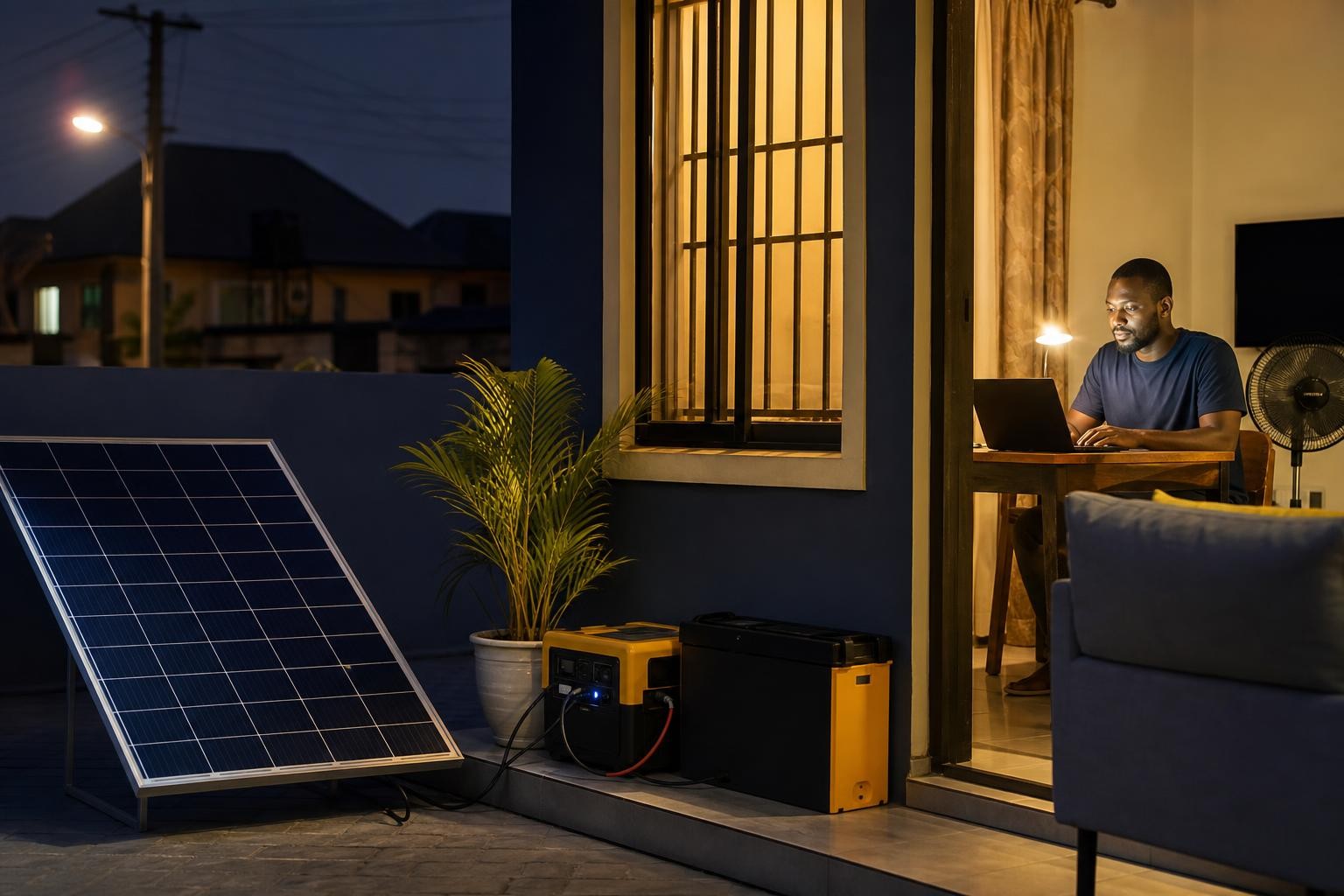
If you only need power for a few important appliances during a blackout, the cheapest safe approach is usually not to back up the whole house. Create a small critical-load plan instead: choose the appliances that matter most, switch off or exclude heavy loads, connect the selected loads through a properly installed backup circuit or approved outlets, and size the inverter and battery for that smaller demand.
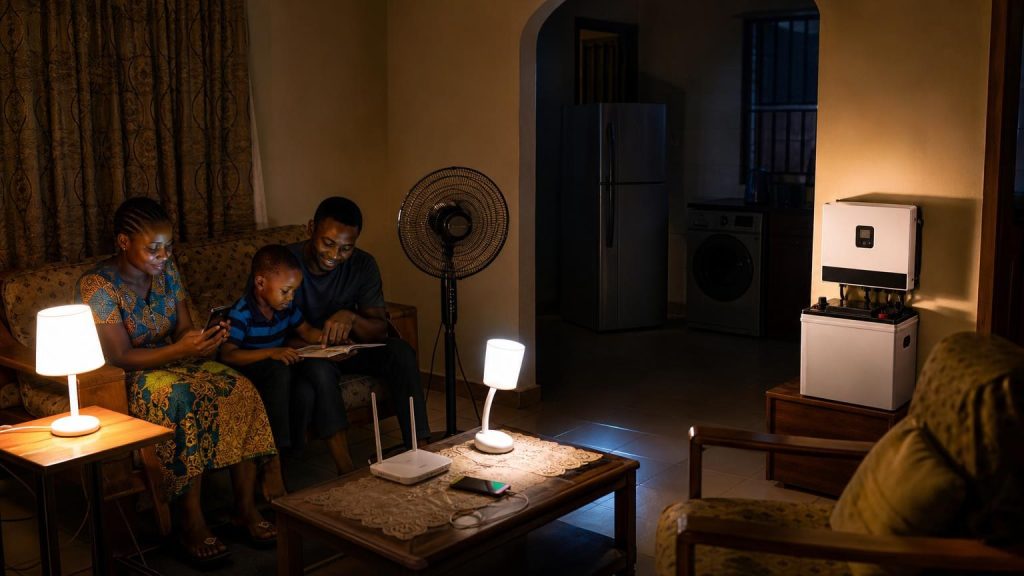
For many Nigerian homes, that may mean keeping lights, fans, a router, phone charging, a television and perhaps a refrigerator running while leaving electric cookers, irons, kettles, water heaters, pumps and air conditioners off. The exact combination depends on your needs and the equipment you already have.
Do not feed an inverter into a wall socket or make an improvised connection to the house wiring. A changeover switch, transfer arrangement, protection devices and earthing must be installed correctly by a qualified professional.
What “critical appliances” means
Critical appliances are the loads you want to keep running when public power from NEPA or your DisCo goes off. They are not necessarily the appliances you use most often. They are the ones that protect safety, communication, work, food or basic comfort.
A typical home may place these in the critical group:
- LED lights in selected rooms;
- one or two fans;
- Wi-Fi router or other internet equipment;
- phone and laptop charging;
- television or decoder, if needed;
- CCTV, alarm or security equipment;
- a refrigerator or freezer, if the inverter and battery can handle its starting demand; and
- a small medical or communication device that must remain powered.
Loads that are often better left outside a small backup circuit include electric cookers, pressing irons, kettles, water heaters, immersion heaters, large pumps, welding equipment and air conditioners. These appliances can use a large amount of power and may have a high starting or heating demand.
The cheapest safe strategy: reduce the load before buying equipment
Before buying another battery or a larger inverter, write down what you truly need during an outage. Then separate the list into three groups:
| Group | Examples | What to do during a blackout |
|---|---|---|
| Must stay on | Selected lights, router, phone charging, medical or security equipment | Keep on first |
| Useful if capacity allows | Fans, TV, decoder, laptop, refrigerator | Add only after checking load and battery energy |
| Leave off | Kettle, iron, cooker, water heater, pump, air conditioner | Use another supply or wait until grid/generator power returns |
This simple separation can save more money than buying a bigger system. A smaller inverter and battery running a controlled critical load may give you better blackout support than a larger system that is overloaded by every appliance in the house.
Calculate the running load first
Add the wattage of the appliances that may operate at the same time. Use the actual nameplate rating where possible. Online estimates are only starting points, and refrigerators, freezers, pumps and compressors do not behave like a simple light bulb.
For example, imagine this selected load:
| Appliance | Example running power |
|---|---|
| Four LED bulbs | 40 W |
| Two fans | 120 W |
| Television | 100 W |
| Router | 15 W |
| Decoder | 25 W |
| Phone and laptop charging | 65 W |
| Estimated total | 365 W |
The 365 W figure is the estimated running load, not the final inverter size. You still need headroom, appliance power factor, inverter efficiency and the starting demand of any motor or compressor. If you add a refrigerator with an example running demand of 150 W, the running total becomes about 515 W, but its compressor may briefly require more power when it starts.
This is why a system can appear to have enough continuous wattage and still trip when a fridge, freezer or pump starts. Check the inverter’s continuous output and surge rating against the actual appliance specifications. SolarPriceNG’s Inverter Calculator can help you organise the load, but the final selection must follow the exact inverter manual.
Choose the right connection method
There are two common ways to keep only critical appliances running:
1. A dedicated critical-load circuit
An electrician separates selected lights, sockets or appliances onto a backup circuit. A suitable changeover or transfer arrangement then supplies that circuit from the grid when available and from the inverter during an outage.
This is usually the cleanest option for a permanent home installation because you do not need to move plugs around every time the power goes off. It also makes it harder for someone to accidentally connect a heavy appliance to a small inverter.
2. Approved individual outlets or a portable power unit
For a small load, you may use equipment designed to power selected devices through its approved outlets. This can work for lights, networking equipment, phones, laptops and other modest loads, provided the unit’s output, battery capacity and protection features match the job.
Do not treat a portable unit as permission to energise house wiring through a wall socket. If you want backup power to reach fixed house circuits, use a properly designed transfer arrangement.
How much battery energy do you need?
Battery sizing is about energy, not only inverter power. The basic planning formula is:
Energy used = appliance power × operating time
Using the 365 W example for six hours:
365 W × 6 hours = 2,190 Wh, or about 2.19 kWh of AC energy
That is a simple load estimate. You then need to allow for inverter and wiring losses, battery charging losses, the battery’s recommended depth of discharge, changing appliance demand and any standby consumption. If you plan around a 90% conversion factor, the battery-side energy required would be approximately:
2.19 kWh ÷ 0.90 = about 2.43 kWh
This does not mean you should buy a battery advertised as exactly 2.43 kWh. You need a practical margin and must use the manufacturer’s usable-energy limits.
- Lithium: use kWh as the primary capacity measure when that is the verified specification. Check usable energy, continuous discharge current, temperature limits, BMS requirements and inverter compatibility.
- Tubular, GEL and AGM: use Ah together with voltage. For example, a 24 V 200 Ah bank has approximately 4.8 kWh of nominal energy because 24 × 200 = 4,800 Wh. The usable amount is lower and depends on the battery manufacturer’s recommended operating limits, age, temperature and discharge rate.
Do not compare a lithium battery and a lead-acid battery by the Ah number alone. Voltage, chemistry, usable energy and discharge limits all matter. Use SolarPriceNG’s Battery Calculator to test different loads and backup periods before choosing a battery bank.
Use a time schedule to reduce battery size
You may not need every critical appliance running for the whole outage. A simple schedule can reduce the battery requirement:
| Period | Possible priority |
|---|---|
| Early evening | Lights, fans, router, TV and phone charging |
| Sleeping hours | Router, security equipment and one fan; switch off TV and unnecessary lights |
| Morning | Lights briefly, router and charging; delay heavy loads until grid, generator or solar is available |
For example, if the television runs for three hours instead of six and only one fan runs overnight, the daily energy requirement can fall without changing the inverter. That may be the cheapest upgrade of all: better load discipline rather than more hardware.
What if the refrigerator must remain on?
A refrigerator can be a reasonable critical load, but it needs more careful checking. Its running wattage is not the only number that matters. The compressor starts and stops, and the starting demand can be much higher than the normal running demand.
Before adding it to a small backup system, check:
- the refrigerator’s actual nameplate information;
- whether the inverter supports motor starting or surge demand;
- the battery’s maximum discharge current;
- how long the refrigerator must run during the outage;
- whether the door is opened frequently; and
- whether the appliance is old, inefficient or poorly ventilated.
If the refrigerator causes the inverter to trip, remove it from the critical circuit until the system is tested. Do not repeatedly restart an overloaded inverter or keep increasing the battery size without checking the surge and wiring design.
What should you do if you already have a solar system?
Start by observing the system during a real outage or a controlled test:
- Record which appliances are connected.
- Record the inverter load in watts, if the display shows it.
- Note when the battery starts and what state of charge or voltage is displayed.
- Switch off one non-essential load at a time and observe the change.
- Check whether the battery was fully recharged before the next outage.
- Compare the actual runtime with the expected load and usable battery energy.
If the battery runs down much sooner than expected, the cause may be excessive load, a battery that is too small, incomplete daytime charging, standby consumption, poor settings or battery ageing. Read why a solar battery may be draining fast before buying another battery.
If the battery does not recover during the day, check the charging path and solar production. More storage will not solve a system that cannot replace the energy it uses. The article Should You Add More Solar Panels or a Bigger Battery First in Nigeria? explains how to separate a generation problem from a storage problem.
Safety checks you should not skip
Keeping only critical appliances on does not remove the electrical risks. Solar panels can produce DC voltage whenever light reaches them, and batteries can deliver very high fault current.
- Do not backfeed an inverter through a wall socket.
- Do not join grid, generator and inverter outputs in an improvised way.
- Use correctly rated breakers, fuses, isolators, cables and changeover equipment.
- Keep battery and inverter equipment dry, ventilated and protected from accidental contact.
- Do not bypass a battery BMS, fuse, breaker or other protection device.
- Do not change battery charging voltages or connect extra batteries without checking the manuals.
- Ask a qualified installer to verify earthing, neutral arrangements, polarity, protection and the separation of backup and non-backup circuits.
NEMSA’s role includes enforcing technical standards, inspecting electrical installations and certifying competent electrical contractors in Nigeria. Its renewable-energy guidance covers solar PV, inverter and battery-storage installation, electrical protection and troubleshooting. For a permanent installation or a change to house wiring, use a competent professional and ask for the work to be checked properly.
A practical low-cost decision path
- List the must-run appliances. Do not start with the inverter size someone quoted you.
- Remove high-power loads. Exclude heating appliances, pumps and air conditioners unless you are intentionally designing for them.
- Add the simultaneous running watts. Use actual nameplate figures where available.
- Check starting loads. Give special attention to fridges, freezers, pumps and other motors.
- Estimate energy in kWh. Multiply each load by the hours it will run.
- Check inverter and battery limits. Match voltage, chemistry, current, surge rating and usable capacity.
- Choose the safe connection. Use approved outlets for portable equipment or a professionally installed critical-load circuit.
- Test before expanding. Measure real load and runtime before buying a larger battery or more panels.
If you are designing a system from the beginning, start with the Solar Calculator, then check the inverter and battery separately. If the battery must be recharged by solar after an outage, use the Solar Panel Calculator as well. Solar panels must cover both daytime use and the energy needed to restore the battery.
Bottom line
The cheapest safe way to survive a blackout is usually to back up fewer appliances, not to buy the biggest equipment. Keep the essential lights, fans, communication devices, security equipment and carefully selected refrigeration load. Leave heavy heating and motor loads off unless the inverter, battery, wiring and protection system were designed for them.
Size the system from the actual simultaneous watts and the energy needed over the outage period. Use kWh for verified lithium capacity, and Ah together with voltage for tubular, GEL and AGM batteries. Treat all changeover and house-wiring work as electrical work, not as a DIY shortcut.
Technical references
- Nigerian Electricity Management Services Agency (NEMSA) — technical standards, inspection and certification information.
- NEMSA renewable-energy installation certification guidance — includes inverter, battery storage and electrical protection competencies.
- Victron Energy configuration guidance — illustrates the distinction between all system loads and critical loads.
- Victron Energy inverter/charger guidance — explains why continuous load, apparent power and starting behaviour matter.